Hello, Food Lovers! Did you know that the protein content of wheat flour plays a very important role in the baking process? Choosing flour for cakes and other baked goods should never be done carelessly. The protein in wheat flour forms gluten when it is mixed with water and kneaded. Gluten gives dough its elasticity, strength, and ability to rise properly. The higher the protein content, the stronger the gluten network will be, resulting in dough that is chewier and more structured.
On the other hand, flour with a lower protein content produces less gluten. The result is a softer, lighter, and more delicate texture that crumbles easily with every bite. Understanding this difference is essential when selecting the right flour for your recipe.
Using the wrong type of flour is often one of the main reasons cakes turn out dense, bread becomes tough, or cookies lose their crisp texture. Before shopping for ingredients, it is helpful to understand the basic characteristics of each type of wheat flour so that your homemade baked goods turn out exactly as you expect.
What Is High-Protein Flour Best Used For?
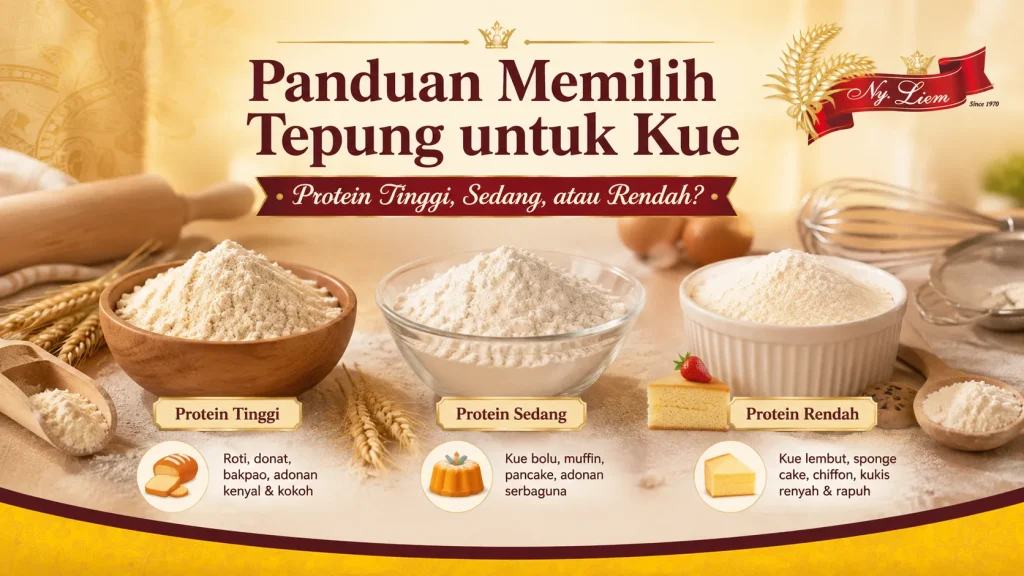
High-protein wheat flour usually contains around 12 to 13 percent protein. It is best suited for dough that requires elasticity and a strong structure, such as sandwich bread, sweet bread, noodles, pasta, and doughnuts. Some widely available high-protein flour options include Sriboga HIME and Tali Emas.
Using this type of flour for cookies will usually make them too hard and less crisp. Therefore, high-protein flour is best reserved for yeast-based bakery products.
Another important characteristic of high-protein flour is its ability to retain the gas produced during yeast fermentation. This allows bread dough to rise properly and maintain its volume without collapsing during baking.
Versatile Medium-Protein Flour
What is medium-protein flour best used for? The answer is almost everything!
Medium-protein wheat flour contains around 10 to 11 percent protein and is commonly known as all-purpose flour. It is the most versatile option because it can be used for a wide variety of recipes, including traditional cakes, sponge cakes, martabak, fritters, and other batters that do not require a highly elastic or overly delicate texture.
One of the most popular medium-protein flours available in Indonesia is Bogasari Segitiga Biru, a well-known all-purpose flour. For beginners who only want to keep one type of flour at home for cakes and everyday baking, medium-protein flour is generally the safest choice.
What Is Low-Protein Flour Best Used For?
Now, let us move on to low-protein wheat flour. This type of flour usually contains around 8 to 9 percent protein. Because it produces less gluten, it creates a light, soft, and delicate texture that easily melts or crumbles in the mouth. This makes it ideal for cookies, cakes, biscuits, and pastries.
Some recommended brands in this category include Bungasari Hana Emas and Niji, both of which are suitable for cookies, sponge cakes, and biscuits.
You may already be familiar with low-protein flour without realizing it. Those who regularly make nastar, kastengel, or other festive cookies have most likely used this type of flour before.
Because of its light texture, low-protein flour is also commonly used for chiffon cakes, sponge cakes, and cookies where softness is more important than chewiness. However, kneading or mixing the batter for too long may prevent it from rising properly.
For this reason, low-protein flour requires different handling from high-protein flour.
Common Mistakes When Choosing Flour
One of the most common mistakes is assuming that all types of wheat flour can be used interchangeably. In reality, replacing high-protein flour with low-protein flour in a bread recipe may result in dense bread that does not rise properly.
Conversely, using high-protein flour for cookies can make them hard, chewy, and less crisp.
Another common mistake is overlooking proper storage. Even when you have selected the correct protein level, flour stored in a damp or humid place may still affect the final texture and quality of your baked goods.
A Quick Way to Tell the Three Types of Flour Apart
In addition to checking the protein content on the packaging, there are several simple ways to distinguish between high-, medium-, and low-protein flour.
First, look at the packaging colour. Most flour brands use different colour codes to identify each protein category.
Second, feel the texture. High-protein flour generally feels slightly coarser when held, while low-protein flour tends to feel finer and softer.
Third, and perhaps most importantly, check the recommended uses printed on the package. Manufacturers usually indicate whether the flour is best suited for bread, cakes, cookies, or fried snacks.
When in doubt, do not hesitate to ask the staff at a baking supply store so that you can avoid purchasing the wrong product.
Tips for Choosing Flour Based on Your Recipe
Before buying flour, make sure you understand the type of recipe you are planning to make. When a recipe does not specify a particular type of wheat flour, use the finished product as your guide.
Use high-protein flour for bread and noodles, medium-protein flour for traditional cakes and fried snacks, and low-protein flour for cookies and cakes.
Keeping all three types of flour at home is not excessive for anyone who bakes regularly. Using the right flour can significantly improve the texture, structure, and overall quality of your baked goods.
Still unsure which type of flour is best for your recipe? Visit Toko Bahan Kue Ny. Liem on Jl. Naripan, Bandung. The store offers a complete selection of high-, medium-, and low-protein flour from trusted brands, along with many other baking ingredients and supplies.
The store team will also be happy to help you select the flour that best suits your recipe, so feel free to ask for assistance.
Ny. Liem Baking Supply Store Location
Address:
Jl. Naripan No. 80, Kb. Pisang, Sumur Bandung District, Bandung City 40112.
Online and wholesale orders:
nyliem.com
WhatsApp and Instagram:
Click here to contact our team through WhatsApp, or visit us on Instagram at @tbk_nyliem.