
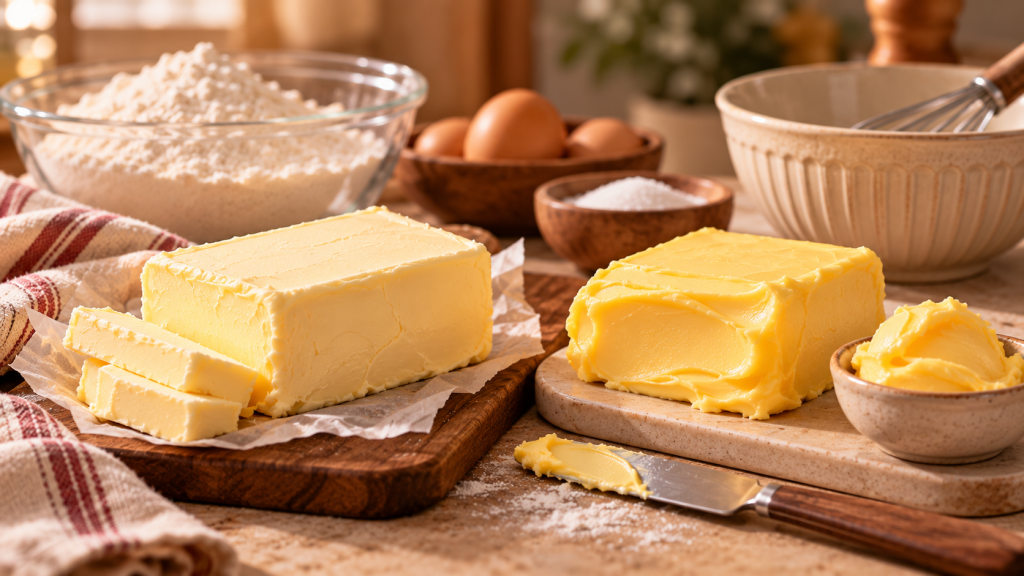
Culinary Friends! What is the difference between margarine and butter? Is butter the same as mentega? The simple answer is:
butter is mentega, while margarine is a different ingredient.
In Indonesia, the word mentega is sometimes used to refer to margarine, even though technically they are different. Their base ingredients, aroma, flavor, texture, and the characteristics they bring to baked goods can also differ. That is why it is important to choose the type of fat according to the recipe and the result you want to achieve.
What Is Butter or Mentega?
Butter, or mentega in Indonesian, is made from milk cream that is churned until the fat separates from the liquid. Butter has a distinctive aroma and a rich, savory, and creamy flavor. In general, butter contains around 80 percent fat, while the rest mainly consists of water and milk solids.
Butter is widely used for cookies, nastar, kastengel, butter cake, pastries, and many other baked goods. Butter also softens easily at room temperature, which can cause some doughs, especially cookie dough, to spread more during baking. For this reason, some recipes require the dough to be chilled before baking.
The final baking result is still influenced by the overall formulation, including flour, sugar, eggs, ingredient temperature, and the processing techniques Culinary Friends use.
What Is Margarine?
Margarine is generally made from vegetable oils and fats that are formulated into a solid or semi-solid texture. Its composition, flavor, water content, and characteristics may vary between products, including household margarine and products specifically formulated for bakery or pastry use.
Margarine usually has a more neutral flavor than butter, although many products are formulated with specific aromas and flavors. Its characteristics also tend to be more stable for bakery production, which is why it is commonly used in sponge cakes, cakes, cookies, bread, and other bakery products.
However, this does not mean margarine is only suitable for cakes, or that butter is only suitable for cookies. The best type of fat still depends on the recipe and the final result you want to achieve.
What Is the Difference Between Margarine and Butter?
The most fundamental difference lies in the ingredients they are made from:
| Difference | Butter / Mentega | Margarine |
|---|---|---|
| Base ingredient | Cream or milk fat | Vegetable oils and fats |
| Flavor | Rich, savory, creamy | Generally more neutral |
| Aroma | Distinctive butter and milk aroma | Depends on the formulation |
| Color | Usually pale yellow | Often more yellow |
| At room temperature | Softens quickly | Generally more stable |
| Main consideration | Flavor and aroma | Stability, consistency, recipe requirements |
| Common uses | Cookies, nastar, kastengel, cake, pastry | Cake, sponge cake, cookies, bakery products |
If a recipe calls for butter, it means butter or mentega, not margarine. Replacing one with the other may affect the flavor, aroma, texture, and how the dough spreads.
Butter or Margarine for Baking: Which Is Better?
There is no single ingredient that is always better. If Culinary Friends are looking for a richer flavor and aroma, butter is often an appealing choice. This is why butter is commonly used in kastengel, nastar, butter cookies, and various premium baked goods.
Margarine can be chosen when Culinary Friends need different dough characteristics, better process stability, or want to adjust the formulation and ingredient costs. For cakes and sponge cakes, both can be used depending on the recipe. For beginner bakers, it is best to follow the type of fat specified in the recipe before starting to experiment.
Can Butter and Margarine Be Mixed?
Yes, Culinary Friends. Some bakers combine butter and margarine to achieve the rich flavor and aroma of butter while also benefiting from the texture and stability of margarine. Bakery businesses may also consider this approach to balance flavor, consistency, and cost.
However, there is no single butter-to-margarine ratio that works for every recipe. A composition suitable for nastar may not work for cookies, kastengel, butter cake, or other products. Follow the recipe formulation and test the results gradually.
The Function of Butter and Margarine in Baking
Butter and margarine do more than add flavor. Fat plays an important role in shaping the texture of baked goods. In some doughs, fat coats flour particles, which affects gluten development and can help produce a softer or more crumbly texture.
In recipes that use the creaming method, butter or margarine is beaten together with sugar to incorporate air into the fat mixture and help develop structure and texture during baking. However, sponge cake, chiffon cake, brownies, cookies, and other products may use different mixing techniques.
That is why Culinary Friends need to pay close attention to recipe instructions. Ingredient temperature, mixing method, mixing time, ingredient order, and baking temperature all affect the final result. The type of flour used also influences the structure and texture of cakes. Culinary Friends who are still unsure can read Ny. Liem’s guide to high-, medium-, and low-protein flour.
Tips for Storing Butter and Margarine at Home
Store butter according to the instructions on the packaging and keep it away from strong food odors. If stored in the refrigerator, use a tightly closed container. For recipes that require softened or room temperature butter, take it out of the refrigerator some time before use so that it becomes soft without melting.
Margarine should also be stored according to the instructions on the packaging. Avoid storing both butter and margarine in hot places or under direct sunlight.
Frequently Asked Questions About Butter and Margarine
Is butter the same as mentega?
Yes. Butter is mentega, made from cream or milk fat. Margarine is different and is generally made from vegetable oils and fats.
What is the difference between margarine and butter?
The main difference is their base ingredients. They can also produce different flavors, aromas, textures, and levels of stability in baking.
Can margarine replace butter?
In some recipes, yes, but the results may not be the same. Beginner bakers are generally better off following the type of fat specified in the recipe.
Which is better for nastar, butter or margarine?
If flavor and aroma are the priority, butter is often chosen. However, some recipes use margarine or a combination of butter and margarine to achieve a particular texture.
Which is better for sponge cake, butter or margarine?
Both can be used depending on the recipe. Butter provides a richer flavor, while margarine can provide different characteristics and greater stability.
Shop for Butter and Margarine at Ny. Liem Baking Supplies Store
Now Culinary Friends know that butter is mentega and is different from margarine. So, make sure you choose the right ingredient the next time you try a recipe!
If Culinary Friends are still unsure which ingredients are suitable for a recipe, you can visit Ny. Liem Baking Supplies Store at Jl. Naripan No. 80, Bandung. Butter, margarine, flour, chocolate, and various other baking ingredients and tools are available. The store team can also help you choose ingredients for home baking or business needs.
For product information, online orders, and wholesale purchases, visit nyliem.com or contact Ny. Liem’s official admin via WhatsApp and Instagram at @tbk_nyliem.
Happy baking, Culinary Friend



One Response